
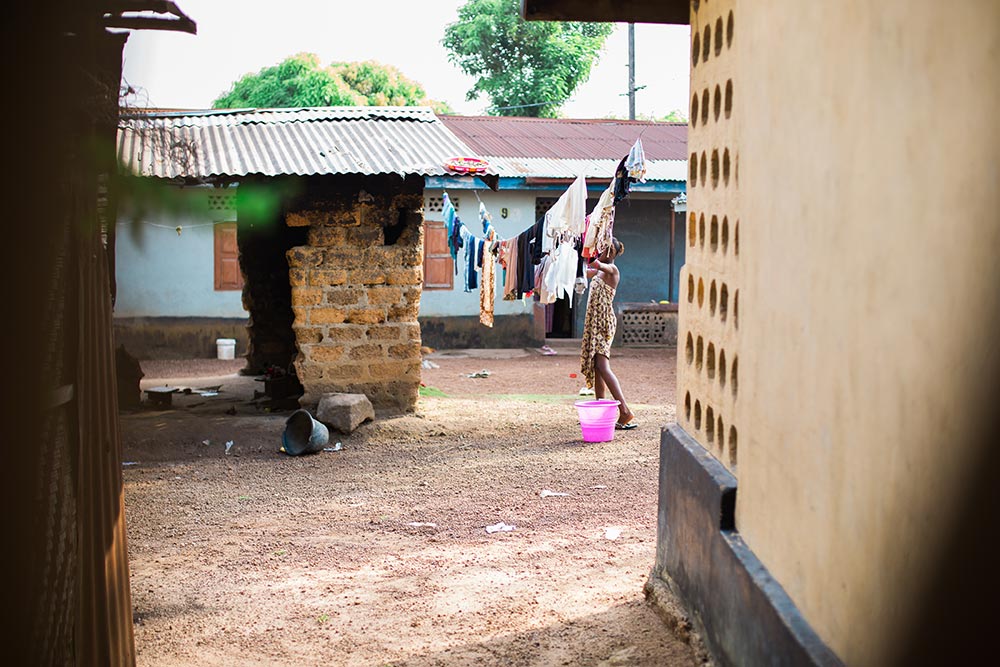
When you hear the word poverty, your definition may be different from mine, or the next person. A clear definition of poverty will put us on the same page so that we can communicate clearly what it means and what we can do to alleviate and ultimately end poverty. This is not an easy task, and it may take each of us some intentional steps to unlearn what we already understand about poverty then to relearn what poverty is on a global scale.
In his book Walking with the Poor, Bryant L. Myers says, “Poverty is a result of relationships that do not work, that are not just, that are not for life, that are not harmonious or enjoyable. Poverty is the absence of shalom in all its meaning.” (Should this be read out of the book?) Poverty is a complex, multifaceted, and interconnected issue. It is not something that is easily definable, a problem that can easily be solved, or is consistent in its nature. “If poverty was easy to define, it would be easy to fix.” Tanya Nace, World Hope International Canada, CEO
Scripture continually calls Christians to care for the poor. In Luke 16, is a passage worth noting, 19 “There was a rich man who was dressed in purple and fine linen and lived in luxury every day. 20 At his gate was laid a beggar named Lazarus, covered with sores 21 and longing to eat what fell from the rich man’s table. Even the dogs came and licked his sores.
22 “The time came when the beggar died and the angels carried him to Abraham’s side. The rich man also died and was buried. 23 In Hades, where he was in torment, he looked up and saw Abraham far away, with Lazarus by his side. 24 So he called to him, ‘Father Abraham, have pity on me and send Lazarus to dip the tip of his finger in water and cool my tongue, because I am in agony in this fire.’
Not everyone commits sin against the poor by doing things to intentionally harm them, but the sin of omission is equally harmful and as we see in this passage from Luke, it matters to Jesus. When we have the resources to help but choose not to, we commit the sin of omission. Leaving the poor to fend for themselves because of our faulty understanding of poverty is a sin of omission.
Poverty is not simply a lack of things, and the opposite of poverty is not wealth – the opposite of poverty is enough. Relationships whether healthy or unhealthy; systems that control outcomes whether healthy or unhealthy will determine if a person will end up experiencing poverty or having enough. Imagine not having enough food when you are hungry, enough water when you are thirsty, enough heat or shelter or proper clothing during a storm, or a voice that will be heard when you’re being abused.
In his book Rich Christians in an Age of Hunger, Ronald J. Sider clears up some misconceptions about the poor, he writes, “To reduce the suffering of the poor, it is essential to know what causes poverty. If we think most poverty results from laziness when, in fact, inadequate tools and unfair systems are major factors, our best efforts will fail. If we think unjust structures are the only cause of poverty when, in fact, personal choices play a role, we also will fail. To be successful, we must start with truth” (p. 129).
He goes on to share 6 causes that create and perpetuate poverty:
Understanding the multi-faceted and interconnected nature of poverty is necessary to shape a right and just understanding of poverty and the poor. All these issues together form a picture of poverty. Not every person is affected equally by all, but not everyone experiencing poverty is affected because of something they have done or failed to do.
Understanding the roots of poverty and realizing that poverty is a complex issue is the beginning of transforming our attitudes and actions towards the poor and alleviating suffering.
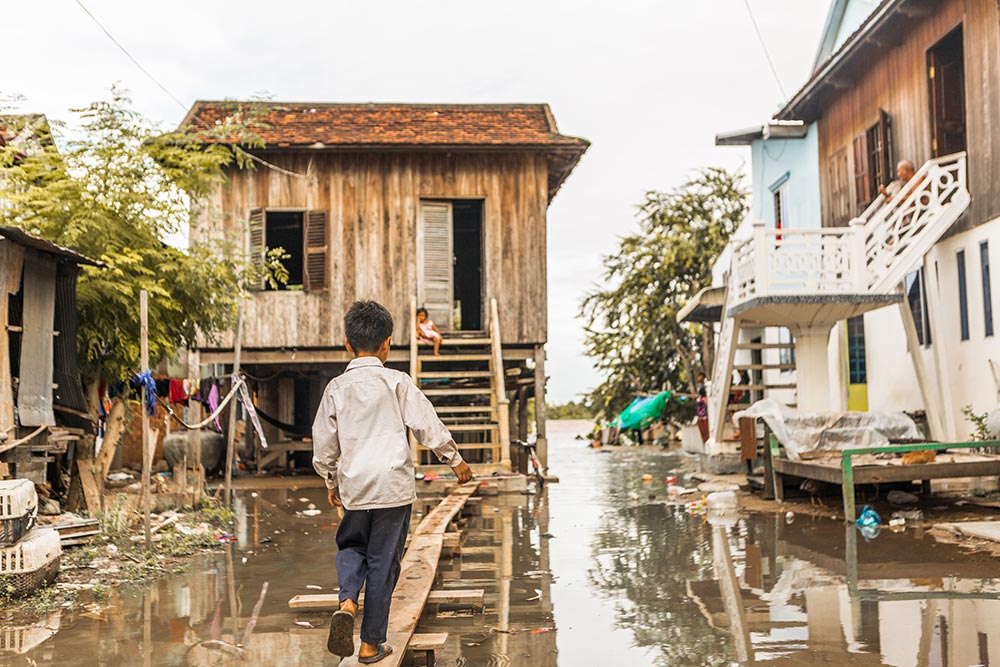
But you may be thinking, what do we do with Jesus’ statement found in Mark 14:7, “The poor you will always have with you?” Taking this Scripture in context, Jesus was responding to a comment made by some of His disciples after a woman broke an expensive bottle of perfume and anointed Him. The complaint was that rather than what they considered wasting it, it could have been sold and the money given to the poor.
This thinking reveals to the reader that the disciples finally understood Jesus’ command to care for the poor. But “The poor you will always have with you” is only the beginning of the passage. In discerning Scripture, it is important to read what comes before and after, and to read through the lens of Scripture in its entirety. Jesus finishes that passage with, “and you can help them any time you want. But you will not always have me.”
At first glance it may appear that Jesus had changed His mind, but Jesus was not disregarding the plight of the poor. He was encouraging the good this woman had done for Him in this brief time before His death. Jesus taught throughout His three years of ministry that acts of generosity and love towards the poor were expected from Kingdom citizens. This is the way of Jesus.
Throughout His earthly ministry, Jesus spends time teaching and encouraging his disciples – and in turn, us, to help the poor. If we take time to carefully read what Jesus says about poverty and the poor in the entirety of Scripture, we will find numerous passages and instruction that teach us to love and help the poor.
Poverty is a result of the fall and was never a part of God’s perfect plan for Creation. With the Fall, all of Creation, including relationships, were affected.
Bryant L. Myers sums it up well in his book, Walking with the Poor, “The poor are poor largely because they live in networks of relationships that do not work for their wellbeing. Their relationships with others are often oppressive and disempowering as a result of the non-poor ‘playing god’ in the lives of the poor.” (Page 15)
When we elevate ourselves and help the poor so we feel better, it continues to perpetuate systems that keep the poor in the cycle of poverty. However, when we commit to partner with the poor to discover their strengths, encourage them to use their voices, ask what they need, listen to their stories, and help them find routes to access these things, we empower the poor to be an active part of their own transformation.

World Hope International (Canada) is a registered charity.
Charitable #869500173 RR 0001
1830 Mountain Road, Suite C
Moncton NB E1G 1A9
+1-613-482-1499
Toll-Free: 877-482-1499
info@worldhope.ca

World Hope International (Canada) funds are confined to Board approved projects. Funds designated towards a project are used as designated, with the understanding that when the need for that project has been met or cannot be completed for reasons determined by the Board, the remaining funds designated will be used where needed most.