
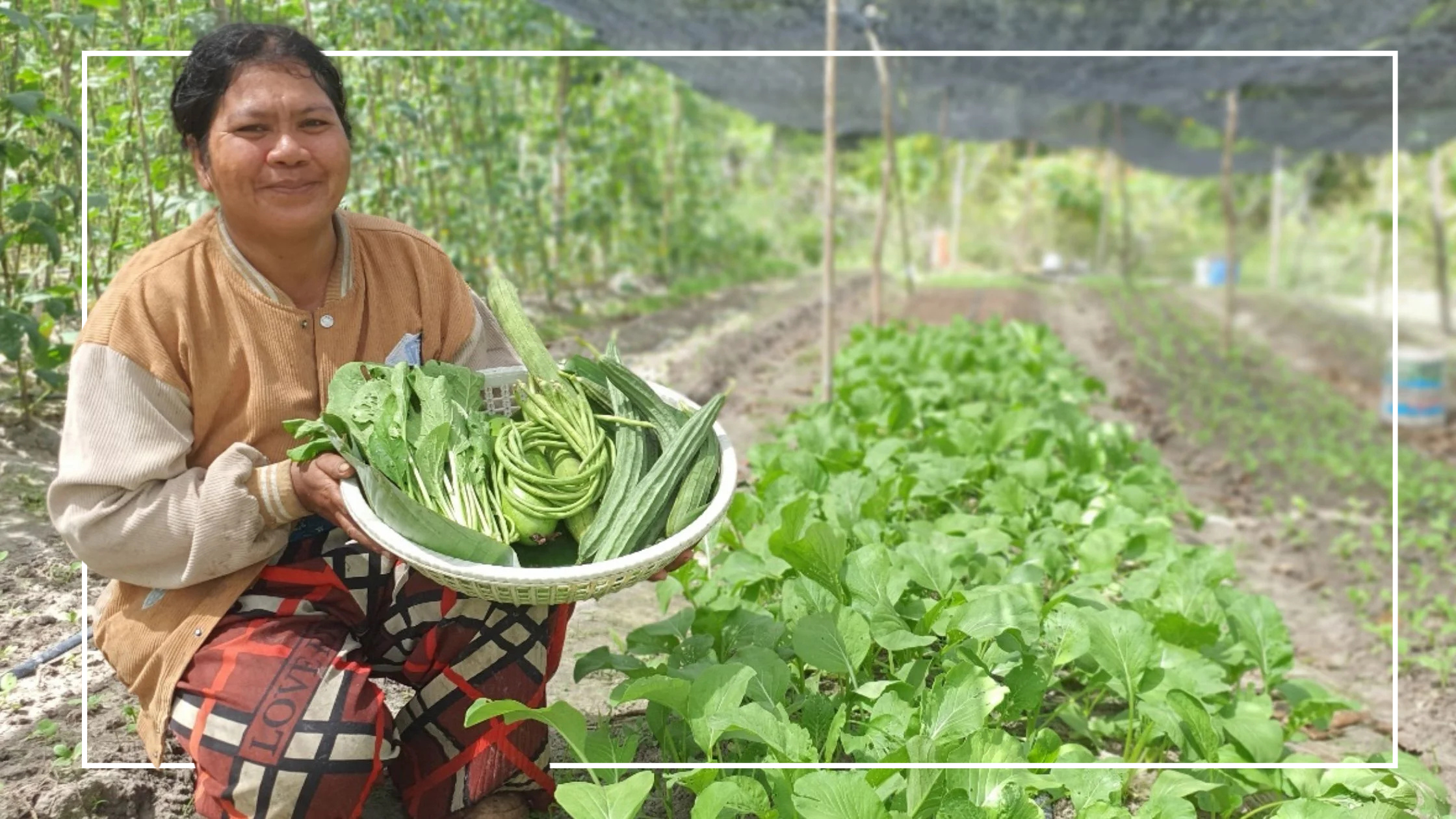
An indigenous Bunong community located near the border of Vietnam, has experienced food insecurity, natural disasters, and disrupted farming traditions. These conditions have increased high-risk migration over the years, making children more vulnerable to exploitation, and families at risk of losing their land; a precious commodity. In 2023, World Hope began working alongside the community and local church, to support them in producing their own food. The church established a small farm but faced barriers to their success including limited resources, pest management issues, and a lack of market connections.
World Hope provided training in seedling production, pest control, and linked them to markets for their produce. The community adopted a sustainable income model: 30% for the church, 30% for community activities, and 40% for reinvestment into the farm.
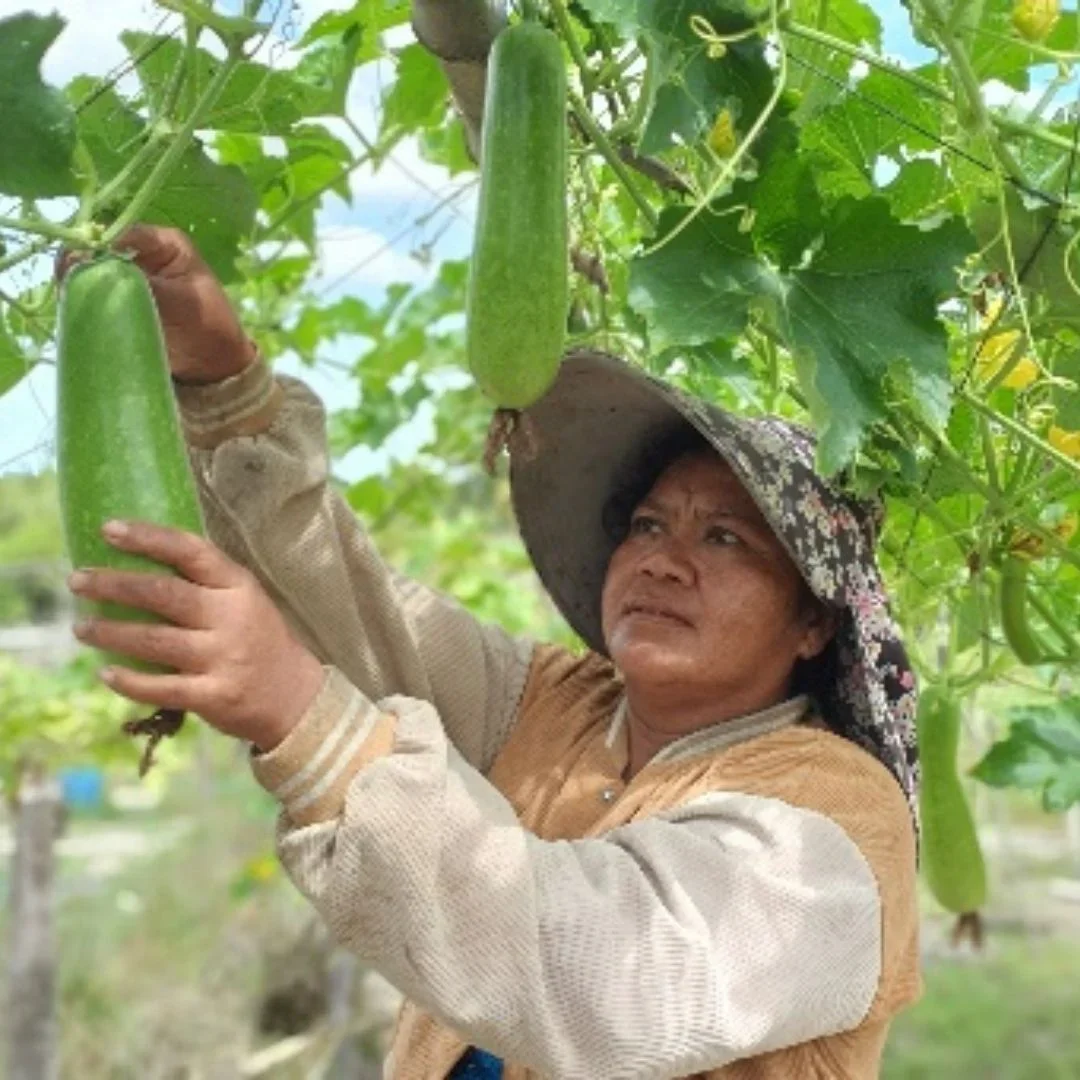
Today, the farm produces a diverse range of vegetables. Their produce is highly sought after in local markets, and the farm has even joined an export program for shallots, successfully planting its second crop this year. Plans for a greenhouse and solar irrigation are underway to continue improving the farm’s sustainability and production capacity.
In addition, the skills learned at the community farm are now being applied to personal gardens. There is improved food security across the village, risky migration has decreased, and children are staying in school. By reclaiming their agricultural roots, the community is creating a sustainable future for the next generation.

World Hope International (Canada) is a registered charity.
Charitable #869500173 RR 0001
1830 Mountain Road, Suite C
Moncton NB E1G 1A9
+1-613-482-1499
Toll-Free: 877-482-1499
info@worldhope.ca

World Hope International (Canada) funds are confined to Board approved projects. Funds designated towards a project are used as designated, with the understanding that when the need for that project has been met or cannot be completed for reasons determined by the Board, the remaining funds designated will be used where needed most.